Back Pain After 35: Common Causes You Shouldn’t Ignore
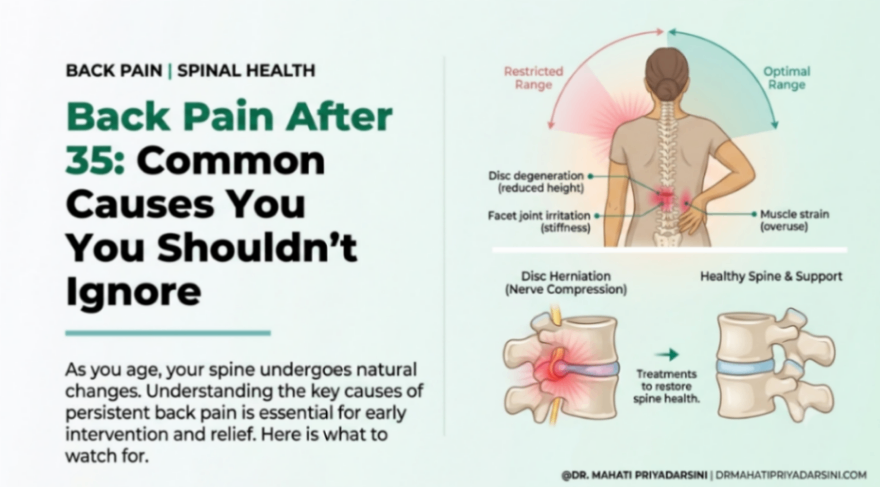
Have you started noticing an ache in your lower back after a long day at work?. Does back pain feel stiff when you get up from your chair climb stairs or get out of bed in the morning? If you are over 35 you are certainly not alone.
Back pain can creep up slowly. Sometimes it is just from sitting long lifting something awkwardly or not moving enough during the day. But when back pain keeps coming gets worse or starts affecting your everyday activities it is worth paying attention to.
The tricky part is that back pain can have different causes. Knowing what is, behind it helps you deal with the problem instead of simply treating back pain for a few days.
Why does back pain become more common after 35?
Your spine does a lot of work every day. Your spine supports your body lets your spine bend and twist and keeps you upright when you sit, stand or walk.
As we get older the discs, joints, muscles and other parts around your spine can change slowly. Add hours at work, bad posture, not enough exercise, stress or repeated strain and your spine may start to hurt.
Many office workers feel this pain often. Sitting at a desk for periods using a laptop having many meetings and rarely moving can make the muscles, around your spine stiff and overworked.
Age alone is not the only cause.
Common causes of back pain after 35:
1. Sitting for long hours
This is one of the most common reasons for back pain among working professionals.
Sitting in the same position for hours can put continuous stress on the lower back. If your chair isn't supportive or your screen and desk aren't positioned properly, your posture can suffer too.
You may notice:
● Lower back stiffness after sitting
● Pain when getting up from a chair
● Aching that builds up towards the end of the workday
● Relief after walking or changing position
Your back isn't designed to stay in one position all day.
2. Muscle strain
Sometimes the cause is surprisingly simple.
Lifting a heavy bag, moving furniture, exercising after a long break, or even bending awkwardly can strain the muscles and ligaments around your back.
The pain usually appears suddenly and may feel worse when you bend, twist, or move.
A mild strain often settles with appropriate rest and gradual movement. But if the pain doesn't improve, it's worth getting it checked rather than repeatedly pushing through it.
3. Poor posture
Good posture isn't about sitting perfectly straight every second of the day. It's about avoiding prolonged positions that put unnecessary stress on your spine.
Slouching at your desk, leaning towards your laptop, sitting with your shoulders rounded, or working from the sofa for hours can all contribute to back discomfort.
The problem is often not one bad sitting position. It's staying in the same position for too long.
4. Lack of movement
This one catches many people out.
When your back and core muscles aren't used regularly, they can become weaker and less able to support your spine. Spending most of the day sitting and then suddenly doing a strenuous workout can put additional stress on the body
Regular walking, gentle strengthening, and appropriate stretching can help keep your back mobile and better prepared for everyday activities.
5. Age-related changes in the spine
After 35, gradual changes in the spine can become more noticeable.
The discs between the vertebrae can lose some of their flexibility and hydration over time. The small joints of the spine can also undergo wear and tear.
These changes don't automatically mean you'll have pain. Many people have age-related changes without symptoms. But when they are combined with other factors, they can contribute to stiffness and discomfort.
6. Slipped or herniated disc
The discs between the bones of your spine act a little like cushions. Sometimes, part of a disc can bulge or herniate and irritate a nearby nerve.
This can cause more than ordinary back pain.
You may experience:
● Pain travelling from the lower back into the buttock or leg
● Tingling or pins and needles
● Numbness
● Weakness in the leg or foot
● Pain that gets worse with certain movements
When back pain comes with nerve-related symptoms, don't simply assume it's a normal muscle strain.
7. Arthritis or spinal joint problems
The joints in your spine can also become painful or stiff as you get older.
You may notice stiffness after sitting or resting for a while, discomfort when bending or twisting, or pain that gradually becomes more frequent.
A proper assessment can help determine whether the pain is coming from the spinal joints, discs, muscles, or another structure.
Warning signs you shouldn't ignore
Not every episode of back pain needs urgent medical attention. But certain symptoms deserve a proper evaluation.
See a specialist if you notice:
● Back pain that keeps returning or doesn't improve
● Pain that is getting progressively worse
● Pain travelling down the leg
● Numbness, tingling, or weakness
● Difficulty walking or doing normal activities
● Pain following a significant injury or fall
● Back pain accompanied by unexplained fever or feeling unusually unwell
● New problems with bladder or bowel control — seek urgent medical attention
These symptoms don't necessarily mean something serious is wrong, but they shouldn't be brushed aside.
What can you do for back pain at home?
For mild back pain, a few simple changes can often make a difference.
● Keep moving: Avoid staying in bed for long periods. Gentle walking and normal movement are usually better than complete inactivity.
● Take regular breaks from sitting: If you work at a desk, get up every so often, walk around, and change your position.
● Check your workstation: Your chair, screen, keyboard, and desk should allow you to work without constantly bending or reaching forward.
● Use heat or cold appropriately: A warm pack may help with stiffness, while a cold pack can sometimes help after a recent strain.
● Build strength gradually: Once acute pain has settled, appropriate exercises for the core, hips, and back can help improve support and movement.
The important thing is not to keep trying random remedies if the pain continues. Temporary relief doesn't always mean the underlying problem has been addressed.
When should you see a doctor?
If your back pain has been lingering, repeatedly returning, or interfering with your work and daily life, it's time to get a proper assessment.
A specialist can work out whether the problem is related to muscles, posture, discs, nerves, joints, or another cause. Depending on what's found, treatment may include guided physiotherapy, exercises, medication for short-term pain relief, targeted injections, or other appropriate therapies.
Getting the diagnosis right matters because not every type of back pain needs the same treatment.
If you're looking for back pain treatment in Hyderabad, getting an accurate assessment is a better starting point than simply relying on painkillers or home remedies.
A realistic word about recovery:
Back pain can be frustrating especially when your job requires you to sit most of the day.
The good news is that many causes of pain can be managed, especially when you deal with them early. Recovery is not always instant. Some days may feel better than others. Getting back to normal activity may take time.
The goal is not just to make back pain disappear for a days. It is to understand why back pain hurts and to help you move, work and live again.
So if you are over 35 and back pain has started to send you warning signals do not simply learn to live with them.
A proper assessment can help identify the cause of back pain and put you on the right path toward recovery. If you are looking for trusted pain relief, in Hyderabad Dr Mahati Priyadarsini offers an approach focused on accurate diagnosis, appropriate pain management and coordinated physiotherapy guidance.