Best Sleeping Positions for Back Pain Relief
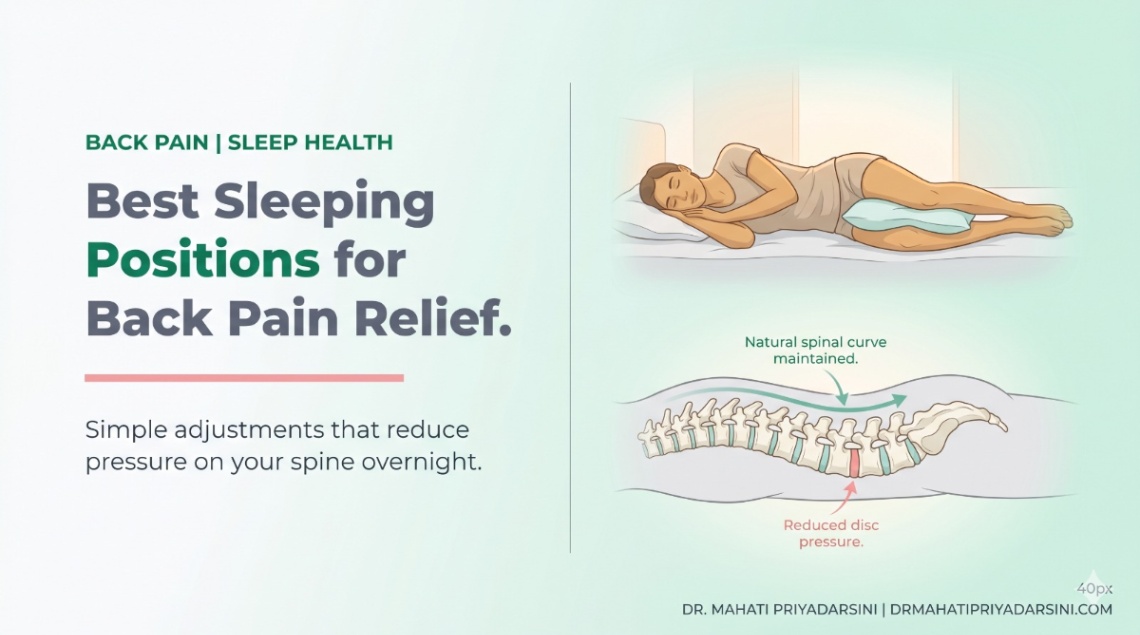
If you wake up with a stiff, aching back almost every morning, the way you sleep could be part of the problem. We spend about a third of our lives in bed, so the position you sleep in, and the support your spine gets through the night makes a real difference to how your back feels during the day.
The good news is that small changes can bring big relief. You don't always need medicine or expensive gadgets. Sometimes, the right position and a well-placed pillow are enough to calm things down. That said, if your back pain has been dragging on for weeks, it's worth getting it checked by the best back pain relief specialists in Hyderabad, because long-standing pain can have causes that no sleeping position alone will fix.
Here's a simple guide to the positions that help and the ones that quietly make things worse.
Why your sleep position matters
Your spine has natural curves. When you lie down, a good position keeps those curves supported and your spine in a relaxed, neutral line. A bad position twists or flattens those curves, which strains the muscles, discs and joints and you feel it the next morning.
The aim of every tip below is the same: keep your spine in a straight, natural line and take pressure off the lower back. If the pain keeps returning despite your best efforts, a back pain specialist in Hyderabad can help find out what's actually going on instead of leaving you to guess.
The best positions for back pain
1. On your back with a pillow under your knees. This is often the gold standard. Lying flat on your back spreads your weight evenly, and slipping a pillow under your knees keeps the natural curve of your lower back so it doesn't flatten against the mattress. A thin pillow under the lower back can help if you feel a gap there.
2. On your side with a pillow between your knees. If you're a side sleeper, this is your best friend. Without support, your top leg slides forward and pulls your hip and lower spine out of line. A firm pillow between your knees keeps your hips, pelvis and spine stacked neatly. Pulling your knees up slightly can add extra comfort.
3. The foetal position (for some back problems). Curling up gently on your side opens up a little space between the bones of your spine, which can ease pressure for people with certain disc problems. Keep the curl loose and relaxed — not tight and tense.
4. On your stomach but only with help. Stomach sleeping is usually the worst for your back, because it flattens the natural curve and forces your neck to twist. But if it's the only way you can fall asleep, place a thin pillow under your stomach and hips to reduce the strain, and try going without a pillow under your head.
Positions and habits to avoid
Sleeping flat on your stomach with no support, twisting your upper body away from your hips, or curling into a tight, stiff ball can all leave you sore. So can an old, sagging mattress that no longer holds your weight properly.
A few extra tips:
Get in and out of bed carefully, roll onto your side first, then push up with your arms instead of jerking upright.
Keep your pillow height right. Your head should stay level with your spine, not propped too high or sinking too low.
Don't stick with a position that hurts just because you're used to it.
What about your mattress and pillow?
A mattress that's too soft lets your hips sink and your spine sag. One that's too hard creates pressure points. A medium-firm mattress suits most people with back pain. Your pillow matters just as much its job is simply to fill the gap between your head and the mattress so your neck stays in line.
You don't need the most expensive option on the market. You need one that keeps your spine neutral and lets you actually relax.
When to see a doctor
Better sleep positions can ease everyday aches, but they aren't a cure for everything. See a specialist if:
Your back pain lasts more than a few weeks
The pain travels down your leg, or comes with numbness or tingling
Pain regularly wakes you at night
The ache is steadily getting worse instead of better
These can be signs of something that needs proper assessment and treatment, not just a new pillow.
The bottom line
How you sleep won't fix every back problem, but it's one of the easiest things to get right and for many people, it's the missing piece. Try sleeping on your back with a pillow under your knees, or on your side with one between them. Give it a couple of weeks, and see how your back feels.
And if the pain keeps coming back no matter what you try, don't just push through it. Getting a proper diagnosis early is the fastest route to lasting relief.