Foot and Ankle Pain After 35: How Your Workday Could Be Making It Worse
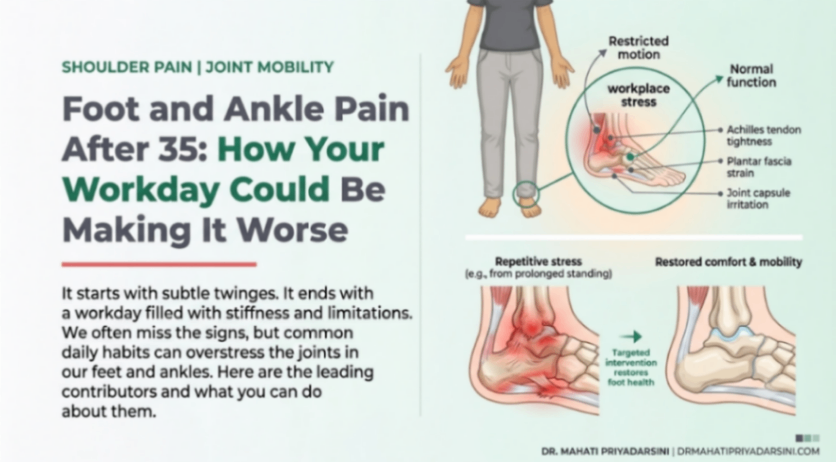
Most people do not think about their feet while they are working. You are busy answering emails sitting through meetings finishing deadlines or moving from one task to another. Your feet are simply there doing their job.
After a while you may start noticing something. Your heels hurt when you get out of bed. Your ankle aches by the end of the day. Your feet feel sore after spending hours at work.
I see this often especially in people over 35. It is not always because they have done something strenuous. Sometimes it is simply the way their workday has been structured.
Sitting for hours suddenly getting up and walking standing during meetings commuting and wearing formal shoes every day can all put stress on your feet and ankles.
That does not mean every foot ache needs treatment. When the same pain keeps coming back I do not recommend ignoring it or assuming it is just age.
Finding out what is causing the pain is a better place to start.
For patients looking for pain management in Hyderabad an early assessment can also help prevent a problem from becoming something that interferes with work and daily life.
Why does your workday affect your feet?
A normal day at the office might not seem like it requires physical effort but your feet are still working hard.
You might sit for hours without moving your ankles much. Then when you stand up you might rush quickly to a meeting. Go out for a meal. Later there's the trip or maybe a workout after work.
For someone who's on their feet most of the day the situation is different but the effect, on the feet can be the same. The feet and ankles are holding your weight for periods without enough time to rest.
Then there are the shoes.
A pair of dress shoes might look great for the office. If they are too tight or don't offer enough support wearing them for eight or nine hours every single day can start to cause problems.
What could be causing the pain?
Your footwear
This is one of the simplest things to look at, but it is often overlooked.
Shoes that are too narrow, too hard or poorly cushioned can put extra pressure on different parts of the foot. You may notice pain around the heel, arch, toes or ankle.
Sometimes changing to a more comfortable, supportive pair makes a noticeable difference.
Sitting for most of the day
I often tell my patients that sitting all day isn't doing their feet any favours either.
When you stay in the same position for hours, your lower-leg and ankle muscles can become stiff. You may feel discomfort when you finally get up and start walking.
This is why I encourage regular movement during the workday. You don't need a long exercise session. Even getting up from your desk, walking around for a few minutes and moving your ankles can help.
Spending too much time on your feet
Some professionals have the opposite problem.
If your work involves standing during presentations, walking around the office or constantly moving between meetings, your feet may simply be getting overloaded.
The pain may not be obvious in the morning. By evening, though, your heels, arches or ankles may feel tired and sore.
An old ankle injury
An ankle sprain from a few years ago can sometimes be connected to pain you're experiencing now.
The injury may have healed, but the ankle may not have regained its full strength or stability. You may only notice the weakness once your daily activity increases.
If your ankle repeatedly hurts, swells or feels as though it might give way, I wouldn't ignore it just because the original injury happened a long time ago.
Plantar fasciitis
Heel pain is another common reason people come to me.
If you feel a sharp pain under your heel with the first few steps in the morning, or when you stand up after sitting at your desk for a long time, plantar fasciitis could be one possible cause.
The pain can sometimes settle after you start walking, which is why people often ignore it in the beginning.
Tendon problems
The tendons around the ankle and foot can also become irritated from repeated stress.
This can happen when you suddenly increase your walking, start exercising after being inactive, or spend long hours standing.
The pain often builds gradually rather than appearing all at once. That makes it easy to dismiss at first.
When should you get your foot or ankle pain checked?
An occasional ache after a particularly long day isn't necessarily a reason to worry.
But I would suggest getting it assessed if:
· The pain has been there for several weeks
· Your foot or ankle is swollen
· The same pain keeps coming back
· Walking has become uncomfortable
· You find it difficult to climb stairs
· Your ankle feels weak or unstable
· Heel pain is affecting your first steps in the morning
· The pain is stopping you from exercising or doing things you normally enjoy
These symptoms don't automatically mean you need extensive treatment. They simply mean it is better to understand what is going on rather than keep guessing.
What can you do during the workday?
Start with a simple changes.
If you are sitting for periods get up regularly. Walk around the office stretch your legs or simply move your ankles for a minutes.
Look at your footwear too. Your work shoes should be comfortable and supportive not just formal enough for the office.
If your calves or ankles feel tight gentle stretching can help.. If you have recently started walking or exercising more increase your activity gradually instead of doing too much, at once.
One thing I would especially recommend is not ignoring recurring pain.
If your feet hurt every evening after work that is not something you should automatically accept as part of having a busy job.
When should you see a specialist?
If the pain is mild and occasional a few changes to your routine may be enough.
But when the pain keeps returning becomes stronger or starts affecting how you walk the pain deserves an assessment.
When a doctor sees a patient with foot or ankle pain the doctor looks at more than the painful area. The doctor wants to understand when the pain started what makes the pain worse whether there has been an injury and how the foot and ankle move.
The treatment depends on the cause. Sometimes changing footwear and activity is enough. At times exercises, physiotherapy, medication, injections or other treatments may be recommended.
For those seeking pain management in Hyderabad the goal should not simply be to control the pain for a days. The pain needs to be understood. The underlying problem must be addressed.
The bottom line
Your job might mean you spend most of your day sitting at a desk of doing hard physical work but that doesn't mean your feet are not suffering.
Many hours spent in one place not moving much standing for periods traveling to work and wearing shoes that don't fit well can all take a toll especially as we grow older.
So if your heel, your foot or your ankle has started to hurt don't just say it's because you are tired or because you are getting older.
I always say to the people who come to see me that if the pain doesn't go away it needs to be checked out. Finding out what is causing the pain early can make it easier to fix and help you return to your work, your usual exercise and your daily life.