From Desk Job to Hip Pain: How Long Hours of Sitting Affect Your Hips
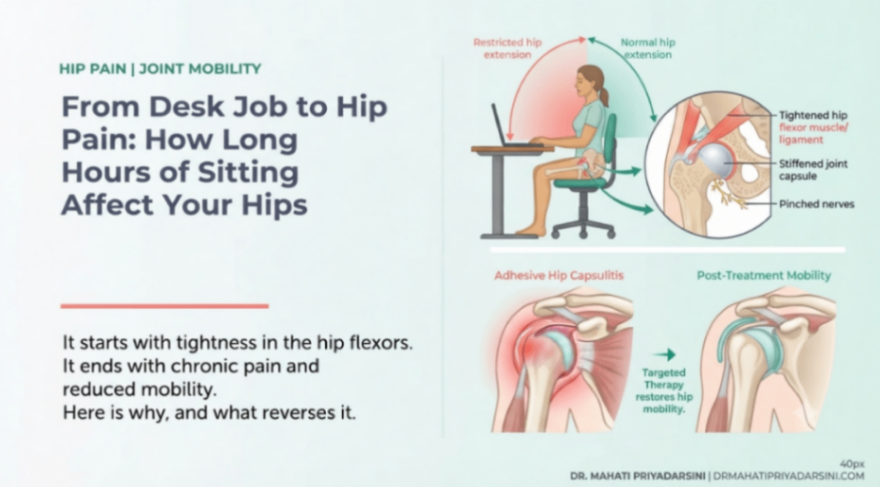
You sit down at your desk when the morning comes. Then there is the meeting. Then emails. Then another meeting. Then lunch while sitting at your desk. Then a few hours working on your laptop. Before you know it you have spent most of the day sitting. For people who work in companies and, in information technology this has become a normal way to spend the day.. What happens when your hip starts to hurt by the end of the day? You might feel stiff when you get up. Your hip might hurt after sitting for a time. Sometimes the pain can even last into the evening. Make it hard to sleep on one side. It is easy to say it is because of a sitting position or just getting older.. Hip pain that keeps coming back needs to be looked at more carefully. The important question is not How long do I sit?" but also "What is causing my hip pain?"
Why Can Sitting for Long Hours Affect Your Hips?
Sitting by itself is not always bad.
The issue usually comes from staying in the position for a long time without moving enough.
When you sit for hours your hips stay bent. If you don't stand up walk or shift positions, the muscles and tissues near the hips can get tight. Feel uncomfortable.
This can become more obvious when you finally get up after a time sitting.
You might feel:
• Hip stiffness after sitting
• Pain when standing up from a chair
• Aching near the hip or bottom
• Discomfort while walking after sitting for a time
• Tightness around the hips
• Pain that gets worse as the workday goes on
But not all hip pain is, from sitting.
That difference matters.
Is Your Office Chair Really Causing Your Hip Pain?
This is one of the common questions I hear from people who work at desks.
Your chair and workstation can definitely affect how your body feels during a workday. A chair that is not adjusted properly a sitting position that is awkward or always leaning to one side can put strain on parts of your body.
It would be wrong to think that every case of hip pain comes from your chair.
Hip pain can have different causes.
These might include issues with muscles or tendons problems, with the joints, nerve irritation past injuries or other health conditions.
That is why getting a chair may not fix the problem if the hip pain keeps coming back.
The "Stand-Up Pain" After a Long Meeting
Think about what happens after a meeting that lasts two hours.
When you stand up from your chair your hip might feel stiff or uncomfortable for a few steps.
After walking for a minutes the hip usually starts to feel better.
This happens because the tissues around the hip get stiff when you stay in one position, for long.
It doesn’t mean there is any injury or damage.
If the same hip discomfort keeps coming back every single day you should pay attention to it.
Your body is giving you signals.
What About Hip Pain That Spreads to the Leg?
Sometimes what feels like hip pain could actually be coming from another part of the body.
You might feel discomfort moving from the back or the buttock area, towards the thigh or leg.
You might also feel:
• Tingling
• Burning
• Numbness
• A shooting or electric-like feeling
• Pain that changes when you move into positions
These kinds of symptoms can sometimes mean there is a nerve issue instead of a problem only with the hip joint.
That is why finding out where the pain is and how it behaves is important, before choosing a treatment.
Why Corporate Employees May Notice Hip Pain More Often
A normal day at the office is more than eight hours of being seated.
Consider the schedule.
You are sitting in your car or a taxi while you are going to work. You are sitting at your desk. You are sitting during meetings. You are sitting when you eat your lunch. You might go home. Spend more time sitting on the couch.
At the time the amount of movement you get during the week could be very low.
Then the weekend comes.
All a sudden you take a long walk play a game or do a hard exercise session.
That sudden shift from no movement to a lot of activity can also add pressure to your muscles and joints.
The issue is not just "sitting."
It is usually the pattern of times without moving followed by quick increases, in movement.
Your Hip Pain May Be Telling You to Move Differently
One simple change you can make while working in a desk job is to avoid staying in the position for long hours.
• Get up periodically during the workday
• Walk for a few minutes between work sessions
• Change your sitting position
• Avoid continuously leaning to one side
• Keep your workstation comfortable and properly adjusted
• Include regular movement in your daily routine
If you exercise, increase your activity gradually rather than suddenly moving from almost no exercise to an intense workout.
These habits may help reduce stiffness and make long workdays more comfortable.
They are not a substitute, for medical assessment when pain persists.
When Should You Stop Blaming Your Desk Job?
This is a distinction.
If your hip feels slightly stiff after sitting for hours and the stiffness eases when you move simple changes in your routine may help.
Persistent or worsening hip pain should not automatically be blamed on your job.
You should consider getting your hip pain evaluated if:
• The hip pain continues for weeks
• The hip pain keeps coming despite changing your routine
• You have difficulty walking because of the hip pain
• The hip pain interferes with sleep
• You experience stiffness in the hip
• There is swelling or tenderness around the hip
• You have numbness, tingling or burning sensations, in the hip area
• The hip pain started after an injury
• The hip pain is becoming worse
A sudden severe injury, inability to bear weight or severe hip pain requires prompt medical attention.
What Happens During an Assessment?
When you come in with hip pain, the first step is understanding what the pain actually feels like.
Where Exactly Does It Hurt?
Is the pain in the front of your hip, the side, the buttock or does it travel down your leg?
When Does It Hurt?
Is it worse after sitting, walking, climbing stairs, exercising or at night?
How Long Has It Been Happening?
A pain that started yesterday after an unusual activity is different from pain that has been present for several months.
I may also ask about your work routine, physical activity, previous injuries and other symptoms.
The hip and surrounding areas can then be examined to understand movement, tenderness and other signs that may help identify the source of the problem.
Depending on the findings, further evaluation or investigations may be recommended.
Does Hip Pain Always Require Surgery?
No.
The treatment varies based on what's causing the issue.
A lot of people who have hip pain can be helped with methods that do not involve surgery depending on what's wrong.
The treatment might include changes in the way someone moves or works, exercises or physical therapy medicines if needed, support from devices or other ways to deal with pain.
The key is to treat what is causing the pain of just trying to make the pain go away.
This is especially important, for people who have jobs and cannot let ongoing pain stop them from doing their work sleeping well or living their life.
Don't Wait Until Your Workday Revolves Around Your Pain
Your job may require you to sit for hours. That does not mean you have to accept hip pain as part of your career. Listen to what your body's trying to tell you. If your hip feels stiff every time you stand after a meeting if you are often uncomfortable by the end of the workday or if hip pain is starting to affect your sleep or your ability to walk do not just keep changing your chair and hoping hip pain will go away. Sometimes a small change, in your routine is enough.
Your Desk Job Doesn't Have to Mean Living With Hip Pain
Modern work usually involves hours in front of a screen.
A long workday should not automatically become a day.
Take movement breaks. Pay attention to posture and the workstation. Stay active outside of work. Gradually increase exercise.
If hip pain keeps returning gets worse. Starts affecting everyday life get hip pain evaluated instead of simply accepting hip pain as a consequence of having a desk job.
If persistent hip pain in Hyderabad, a proper assessment can help determine whether hip pain is related to muscles, tendons, joints, nerves or another underlying cause.
Understanding the source of hip pain is the step, towards choosing the right treatment.
Work may keep a person at a desk.
Health should not have to stay at the desk.