From Emails to Wrist Pain: How Your 9-to-5 Could Be Affecting Your Hands
Your inbox is full. Meetings are lined up. A deadline is getting closer.
While replying to emails and finishing a report you notice an ache in your wrist.
You move your hand around. Stretch your fingers. Keep working.
Task list is long. Wrist pain can wait.
Later while holding your phone opening a jar. When I lift a cup of tea wrist pain comes back.
If this sounds familiar you might be feeling wrist pain from typing or other repetitive tasks. Many people who spend hours at computers ignore wrist pain thinking it is just a normal part of office life. Recurring wrist pain may need attention. This is especially true when wrist pain starts to interfere with activities.
Whether you are dealing with wrist pain or searching for wrist pain treatment in Hyderabad knowing the causes can help you see when workplace changes are helpful and when you should see a qualified healthcare professional.
Why Do Office Workers Experience Wrist Pain?
A typical office day involves hand movement than we might realise. Typing emails using a mouse scrolling through documents and switching between devices all require repeated movements of the fingers and wrists.
These activities do not automatically cause an injury.. If you do them for long periods with awkward wrist positions, forceful movements and, without enough breaks it can lead to discomfort.
You might notice wrist pain towards the end of the working day.. Maybe your hand feels stiff when you move it. You get soreness that comes back every time you start typing again.
The cause isn’t always your workstation though. Tendon irritation, nerve compression, joint problems and previous injuries can also lead to wrist pain. I know how frustrating wrist pain can be. Paying attention to where wrist pain occurs and which activities trigger wrist pain can help a clinician understand what may be causing wrist pain.
Common Causes of Wrist Pain You Should Know About
I have noticed that wrist pain can feel different for each person. Recognizing the pattern of discomfort is the step to understanding what might be causing it.
1. Repetitive Strain from Typing and Mouse Use
I have seen wrist pain after hours of nonstop computer work. Repeated hand motions and staying in one position for long can cause muscle fatigue and irritation around the wrist. A keyboard that is too high a mouse that is away or bending the wrist again and again can make working feel less comfortable.
Try keeping the keyboard and mouse by. Keep the wrists straight. Take short breaks to change posture and activity.
If wrist pain continues after these changes do not assume that poor posture is the explanation.
2. Pain on the Thumb Side of the Wrist
I have seen wrist pain focused near the base of the thumb. You might notice it when lifting a bag holding a phone opening a jar or turning a doorknob.
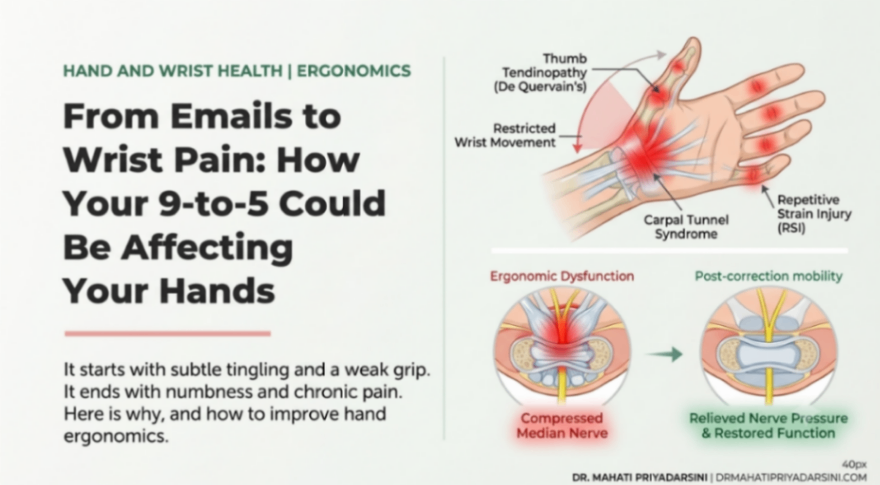
One possible cause is De Quervains tenosynovitis, a condition that affects tendons and the tissue around them near the thumb side of the wrist. Activities that involve repeated thumb movements or gripping can worsen the symptoms. However pain in this area can have causes so a clinical exam is important before deciding on treatment.
3. Numbness or Tingling in the Fingers
I have seen wrist problems that do not always cause pain alone. You may feel tingling, numbness or a pins-and-needles sensation in your fingers.
One possible explanation is carpal tunnel syndrome, which happens when the median nerve is compressed as it passes through a passage, in the wrist. The thumb, index finger and middle finger are commonly affected. Some people experience symptoms at night waking up needing to shake their hands or finding it hard to hold objects.
Persistent numbness, reduced grip strength or worsening symptoms should not be ignored. A healthcare professional can assess whether nerve compression or another condition is responsible.
How Your Workstation May Be Contributing to Wrist Pain
Small changes to the way you work at your computer can make a difference in how comfortable you feel. You don't have to change your whole office setup to feel better.
Think about these adjustments:
• Keep your keyboard at a height that feels right for you: Don't put it so high that your wrists are bent too much upwards.
• Keep your mouse close by: Having to reach across the desk and over can make your arms and wrists feel uncomfortable.
• Don't sit with your wrists resting on an edge: Doing this for too long can cause pain or discomfort.
• Take breaks often: Stopping for a few minutes and changing what you're doing can help prevent long periods of the same movements.
• Make sure your sitting position is right: Keep your shoulders loose and your elbows, in a place while you work.
Holding it for a time or using your thumb a lot can make existing problems worse.
These changes might help reduce some strain. They won't fix every wrist problem. If the discomfort still happens it's important to look into what might be causing it.
Why Wrist Pain May Continue After Office Hours
Your work day may finish at 6 PM. Your hands stay busy. During the commute you might scroll on your phone reply to messages at home cook dinner or work out at the gym. These everyday actions can require more gripping, lifting and repeated wrist movements. Pay attention to whether any single activity worsens your symptoms.
For example pain that appears when you lift objects may need an approach, than tingling that shows up mainly at night.
If one activity keeps making your pain worse do not push through the movement. Think about changing it for a while.. Getting worse symptoms call for professional help instead of just resting or using home fixes.
When Should You Seek Medical Advice for Wrist Pain?
Occasional discomfort after a busy day might go away with rest and simple changes to what you do.. If the pain keeps coming back or starts to get in the way of your everyday life it's important to take it seriously.
Pay attention if:
· Your wrist pain keeps coming or gets worse over time.
· You find it hard to type grip things or lift objects.
· You have numbness or a tingling feeling that doesn't go away.
· Your hand feels weaker than it used to.
· Pain, in your wrist wakes you up often at night.
· Swelling, stiffness or trouble moving your wrist doesn’t improve.
If you’ve had a fall or injury and your wrist hurts badly looks deformed. You can’t move it get help right away. Also go to the doctor immediately if you suddenly feel weak numb or if you have facial drooping or trouble speaking. These could be signs of something
Don’t wait until the pain is affecting your job or your daily routine. It’s better to get checked. Sometimes small problems can become bigger if they aren’t treated.
How Is Wrist Pain Diagnosed and Treated?
Finding the right wrist pain treatment begins with knowing what’s causing the pain. Two people might have the kind of pain but their treatment can be very different because the cause may not be the same.
When a doctor or therapist sees you they will ask questions like: When did the pain begin? Where exactly does it hurt? What makes it worse? Have you noticed any numbness, tingling or weakness in your hand or wrist?
They might also check how well your wrist moves how strong your grip is, if there’s tenderness and if there are signs of nerve or tendon problems. Sometimes they’ll suggest tests to get a clearer picture.
Treatment depends on what’s wrong and how bad the symptomsre. Some common options include:
• Activity modification: Changing the way you move your wrist or adjust tasks that make the pain worse.
• Physiotherapy or exercises: Doing movements to help your wrist move better and work more normally. Only if it’s right for your condition.
• Splinting: Wearing a splint to support your wrist especially if keeping it in a position helps reduce pain.
• Medication: Taking medicine but only under a professional’s advice, when it’s needed.
• Specialist treatment: Looking into other options like injections, advanced therapy or other steps if the first treatments don’t help enough.
Surgery is not always needed for wrist pain. The best plan depends on your cause what the exam shows and how your body responds to treatment.
Don’t start doing exercises wear a splint all the time or take medicine without checking with a first. What works for someone might not be right, for you.
Wrist Pain Treatment in Hyderabad: When to Consult a Specialist
If wrist discomfort is hurting your work, sleep or daily life getting a professional assessment can help clarify the cause.
People who want wrist pain treatment in Hyderabad should look at their symptoms the clinicians relevant qualifications and the treatment options that fit their condition.
A wrist pain specialist, in Hyderabad can examine symptoms and decide if they come from tendon irritation, nerve compression, joint problems or another hidden issue.
Dr. Mahati Priyadarsini focuses on pain assessment and management. The right treatment plan depends on a person’s symptoms and clinical findings.
Of waiting for wrist discomfort to become hard to manage try to get advice when wrist pain keeps coming back or starts to affect regular activities.
Don't Let Wrist Pain Become Part of Your Daily Routine
Work deadlines, emails and meetings can take up most of your day. It's easy to push a little pain in your wrist. But if the pain keeps coming when you type lift a cup or use your phone it’s not something you should ignore.
Your workstation setup and the way you do things every day might be part of the issue.. It could be a problem with a tendon, a nerve or a joint. Small changes to how you work might help.. If the pain sticks around it’s time for a proper check-up.
Finding out what’s causing the pain is the step toward getting the right treatment. That way you can get back, to your life with less discomfort.
Your inbox can wait. Your health shouldn’t.