Hip Pain in Women: Causes You May Not Expect
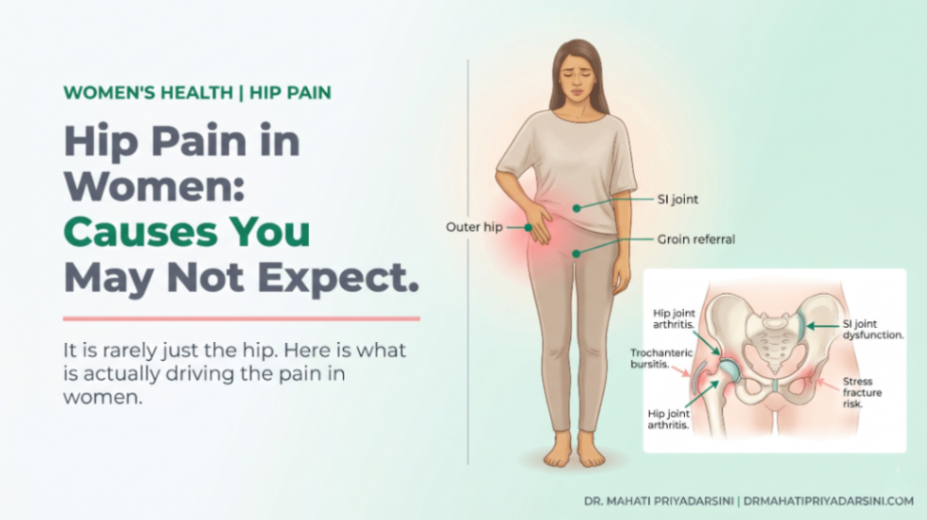
Hip Pain in Women: Causes You May Not Expect
Hip pain is something many women live with quietly, often blaming it on age, tiredness, or "just one of those things." But hip pain is rarely random. It usually has a clear cause and in women, some of those causes are surprising and easy to miss. The pain you feel in your hip might not even be coming from the hip joint at all.
Understanding what's behind your hip pain is the first step to getting rid of it. Too often, women put up with discomfort for months or years before getting it checked, by which point a simple problem has become a stubborn one.
The encouraging news is that most hip pain responds well to treatment once the real cause is found. From simple lifestyle changes to physiotherapy for joint pain relief in Hyderabad, there are many ways to ease the pain without rushing into anything drastic. And if the ache has been dragging on, seeking proper pain relief in Hyderabad early can stop it from limiting your daily life.
Here are some causes of hip pain in women you might not expect.
Where is your "hip pain" actually coming from?
The word "hip" covers a lot of ground. Pain on the outer side, in the groin, in the buttock, or across the lower back can all be called "hip pain" but each points to a different cause. Knowing where it hurts helps narrow things down, which is why a proper check-up is so useful.
Surprising causes of hip pain in women
1. Bursitis (outer hip pain). This is one of the most common causes in women. Small fluid-filled cushions called bursae sit around the hip to reduce friction. When one gets inflamed, you feel a sharp or aching pain on the outer side of the hip, often worse when lying on that side at night or climbing stairs. It's frequently mistaken for a joint problem when it's actually the soft tissue.
2. Tight or weak muscles around the hip. Women's hips are built slightly wider than men's, which changes the angle of the joint and the pull of the surrounding muscles. Weak glutes or tight hip muscles can throw the whole area out of balance, causing pain that has nothing to do with the joint itself.
3. Hormonal changes. During pregnancy and around menopause, shifting hormones loosen ligaments and affect bone strength. This can lead to instability, aching, and a higher risk of hip problems — something many women don't connect to their hormones at all.
4. Lower back and pelvic problems. A pinched nerve or issues in the lower spine can send pain straight down into the hip and buttocks. Problems with the sacroiliac joint (where the spine meets the pelvis) are especially common in women and often disguise themselves as hip pain.
5. Arthritis. Osteoarthritis wears down the cartilage in the hip joint over time, causing stiffness and groin pain that's worse with movement. It tends to creep in gradually, which is why it's easy to dismiss in the early stages.
6. Referred pain from the pelvic organs. This is the one most people never expect. Conditions affecting the reproductive organs, such as endometriosis or ovarian issues, can cause pain that's felt in the hip or groin. If hip pain comes and goes with your monthly cycle, this is worth mentioning to a doctor.
Symptoms worth paying attention to
Some hip aches settle with rest, but see a specialist if you notice:
● Pain that lasts more than a few weeks
● Pain that disturbs your sleep, especially when lying on one side
● Stiffness that makes it hard to walk, bend, or climb stairs
● Pain that spreads into the groin, thigh, or lower back
● Swelling, or a hip that feels unstable or like it might give way
These signs suggest the cause needs a proper look rather than guesswork.
What helps at home
For mild hip pain, a few simple steps often bring relief:
● Gentle movement. Resting completely can stiffen the joint further. Light walking and stretching keep it mobile.
● Heat or ice. Ice helps with swelling; heat relaxes tight, achy muscles.
● Strengthening exercises. Building up the muscles around the hip takes pressure off the joint. A guided programme works best.
● Mind your posture and sleep. A pillow between the knees while sleeping on your side keeps the hips aligned and eases nighttime pain.
When to see a specialist
Home care helps with the early, mild stages, but it isn't a replacement for a proper diagnosis when pain lingers. A specialist can work out whether the pain is coming from the joint, the muscles, the spine, or elsewhere — and treat the actual source. Depending on the cause, this might involve guided physiotherapy, targeted injections, or other therapies designed to settle the pain for good.
The bottom line
Hip pain in women often has causes that aren't obvious — and that's exactly why it shouldn't be ignored or self-diagnosed. The sooner you understand what's really going on, the sooner you can fix it.