Hip Pain When Getting Out of a Chair? Causes and Treatment Options
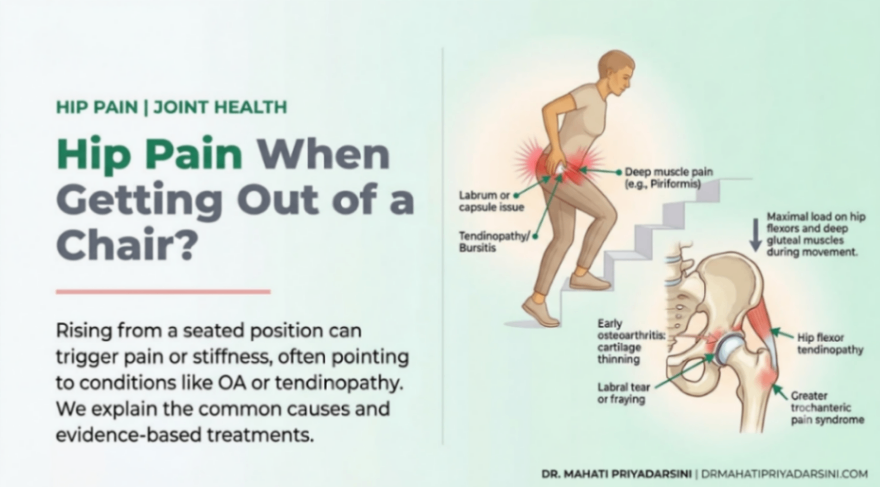
You finish a meeting push your chair back and stand up.
Instead of walking away in a relaxed way you feel a sharp pain around your hip. Maybe your hip feels tight for the few steps. Perhaps you need to pause before you can walk normally again.
After a minutes the pain starts to get better.
So you sit back down keep working and forget about it. Until it happens again the day.
If this sounds like what you go you are not alone. Many people have hip discomfort after sitting for periods especially those who spend most of their time working at a desk.
It is easy to blame your office chair, bad posture or not enough movement. Sometimes these things can play a part. Hip pain when standing up from a chair can have many different reasons and knowing the pattern is the first step to dealing with it.
For people with hip pain in Hyderabad it is important not to ignore pain or stiffness especially if it starts getting in the way of everyday tasks. Seeing a trained doctor for a checkup and pain management in Hyderabad can help find the cause and suggest the right treatment.
Why Does Your Hip Hurt When You Stand Up After Sitting?
Think about how your hip spend used most of the day while you are at work.
You sit through meetings check emails work on your laptop and sometimes eat lunch while sitting. For hours your hips stay bent and don't move much. I notice that my hips feel tight after a time of sitting.
When you finally stand up your hip joints and the muscles and tendons around them have to move through a range of motion.
If there is already a problem with your hips this change, in position might make the discomfort more obvious.
You might experience:
• Stiffness around the hip after sitting.
• Pain during the few steps after standing.
• Discomfort when getting out of a chair.
• An ache, around the groin, buttock or outer hip.
• Difficulty standing up after a meeting or car journey.
The important thing to remember is that pain after sitting is a symptom, not a diagnosis. Where you feel it. How it behaves can help identify the possible cause.
1. Hip Stiffness After Sitting for Long Hours
Have you ever gotten up after working for two or three hours. Felt that your hips needed time to relax?
This kind of tightness might become more obvious after being for a long time.
Staying in the position for too long can make it hard to move especially if you already have tight muscles or a problem with your joints.
You might notice that walking for a minutes helps.
If the stiffness happens often it shouldn't be blamed on sitting alone. If your hip hurts every time you stand up or if the tightness is getting worse it's worth checking what is causing it.
What might help
Try to take small movement breaks during your workday. Change how you sit often and don't stay seated for hours without standing up.
If the pain keeps happening after making these changes seeing a doctor can help find out if something other, than sitting is making your symptoms worse.
2. Could Hip Arthritis Be Causing the Pain?
One possible cause of hip pain when standing up is hip osteoarthritis.
The hip is a ball-and-socket joint. In osteoarthritis changes to the cartilage and other structures within the joint can lead to pain, stiffness and reduced movement.
You might notice:
• Pain around the groin or front of the hip.
• Stiffness after sitting or resting.
• Discomfort when climbing stairs.
• Pain while walking or standing for periods.
• Difficulty putting on shoes or socks because hip movement feels restricted.
Hip osteoarthritis becomes more common, with age. Age alone cannot determine whether someone has the condition.
If your hip pain is persistent and accompanied by movement a doctor can assess your symptoms and decide whether further investigations are needed.
3. Pain on the Outside of Your Hip When Standing Up
Everyone does not feel hip pain in the spot.
Some people feel discomfort on the side of the hip especially when they get up from a chair walk for a long time or lie on the side that hurts.
One possible cause is trochanteric pain syndrome, known as GTPS. It often involves irritation or problems with the tendons that surround the hip.
The pain may become more noticeable when you put weight on the leg or climb stairs.
If the outer side of your hip hurts regularly the cause may not be the hip joint itself. The tendons and soft tissues, around the hip may also be involved.
The treatment depends on the structures that are affected so finding the source of the pain is important.
4. Can a Desk Job Contribute to Hip Pain?
Consider a day for a corporate employee.
You travel to work sitting in a car or cab. You spend most of the day at your desk attend back-to-back meetings and then sit again during your commute home.
By evening your hips feel stiff or uncomfortable.
Prolonged sitting can contribute to discomfort. Aggravate certain existing problems. Limited physical activity may also affect your mobility and strength.
However a desk job does not automatically mean you will develop a hip condition and sitting is not the possible cause of hip pain.
If you work hours at a computer a few practical changes may help:
• Get up periodically and walk for a few minutes.
• Adjust your chair so your feet rest comfortably on the floor.
• Avoid continuously leaning to one side.
• Change positions throughout the day.
• Include physical activity, in your routine.
These habits may help reduce stiffness. They should not replace medical evaluation if the pain keeps returning.
5. What If Your Hip Pain Travels to Your Buttock or Leg?
Sometimes when the hip feels uncomfortable the cause may actually be the back or nerves not the hip joint itself.
I have seen that pain can start near the buttock and then travel down the thigh. Many people also feel tingling, numbness, burning or a shocky electric buzz.
These symptoms may show that nerves are irritated or that pain is coming from another area.
It is very important to see the difference because treating a hip problem can be very different from treating pain that comes from the lower back.
If the pain goes into the leg keeps coming or comes with numbness or weakness you should ask a doctor for help instead of just blaming long sitting.
If you notice problems with bladder or bowel control, numbness, near the groin or saddle area or if leg weakness gets worse quickly you need an emergency doctor right away.
6. Why Does the Pain Improve After Walking for a Few Minutes?
When you stand up you feel a bit of pain in the few steps but then walking becomes easier.
This pattern can happen when the tissues around the hip become stiff after a period of rest.
However getting better with movement does not point to one condition. Many joint, muscle and tendon problems can create pain that changes when you move. How long the stiffness lasts, where it is and if other symptoms appear all matter.
Notice how often this pain happens. If the pain shows up after a very long day a change, in your routine might help. If the pain happens every time you stand up lasts for weeks or slowly gets worse think about getting it checked by a professional.
What Can You Do at Home to Reduce Hip Pain After Sitting?
If the discomfort is mild and there are no concerning symptoms, a few adjustments may make your workday more comfortable.
· Take movement breaks: Avoid sitting continuously for several hours. Stand up periodically and walk around if comfortable.
· Make your workstation comfortable: Adjust your chair and desk so you can sit without excessive strain. No single sitting posture needs to be maintained rigidly all day; changing positions is useful.
· Stay physically active: Regular, appropriate activity can help maintain strength and mobility. Increase exercise gradually rather than suddenly starting an intense routine.
· Avoid movements that aggravate the pain: If a particular exercise or activity repeatedly triggers discomfort, modify it until you understand the cause.
· Do not force painful stretches: Gentle movement may be helpful, but exercises should be appropriate for your symptoms and underlying condition.
If the pain is severe, follows an injury or makes it difficult to bear weight, seek prompt medical care rather than relying on home remedies.
When Should You See a Doctor for Hip Pain?
Occasional stiffness is different from pain that repeatedly interferes with your everyday activities.
Consider seeking a medical assessment if:
· Your hip hurts whenever you stand up after sitting.
· The discomfort continues for several weeks.
· Pain is affecting your walking or ability to climb stairs.
· You experience persistent stiffness or reduced hip movement.
· The pain interferes with your sleep.
· You notice pain spreading down your leg or persistent tingling.
· Your symptoms are becoming progressively worse.
Sudden severe hip pain, inability to put weight on the affected leg, or severe pain following an injury requires urgent medical assessment. Fever with a hot or swollen hip also needs prompt attention.
How Is Hip Pain Diagnosed?
The first step is understanding where the pain comes from.
During an assessment, I may ask when the pain started, how long you sit each day, where you feel the discomfort and which movements make it worse.
I may also assess your walking pattern, hip movement, strength and areas of tenderness.
Depending on the findings, further investigations such as X-rays or other imaging may be recommended. Not everyone needs a scan; the decision depends on the symptoms and examination.
This process helps distinguish between possible causes such as joint-related problems, tendon conditions, muscle issues and pain referred from the lower back.
Can Hip Pain Be Treated Without Surgery?
In cases hip pain can start with non-surgical methods depending on what is causing it. Treatment can involve changing how you move, doing the exercises or seeing a physiotherapist taking medicines when needed and using other ways to manage pain. Some problems might need a specialist in bones and joints to look at it. Might need an operation. The best treatment depends on what the problem's how bad the symptoms are and how healthy the person is overall. The goal is not just to get rid of the pain for a while. It is to find out what is causing it and pick a treatment plan that helps make things better for comfort, movement and daily activities.
Don't Let Hip Pain Become Part of Your Workday
Your job might mean you spend a lot of time sitting at a desk. Having trouble standing up comfortably should not be something you just accept as part of having an office job. Pay attention to the pattern. Does your hip hurt after sitting for a long time? Is the pain near the groin or on the side of the hip? Does the pain go down your leg? Does the stiffness get better after you walk or does it get worse? These details can help a doctor figure out what is going on. If you are having hip pain in Hyderabad, a full check-up can help find the cause and see if non-surgical ways to manage pain are right for you. At Dr. Mahati Priyadarsinis practice the focus is on finding out where the pain is coming from and looking at the treatment options for each person. You do not need to worry about every little after a long meeting. If the pain keeps coming back don't just keep changing your chair and hoping it will go away. The first step, to movement is knowing why your hip hurts in the first place.