How Corporate Employees Can Relieve Foot and Ankle Pain
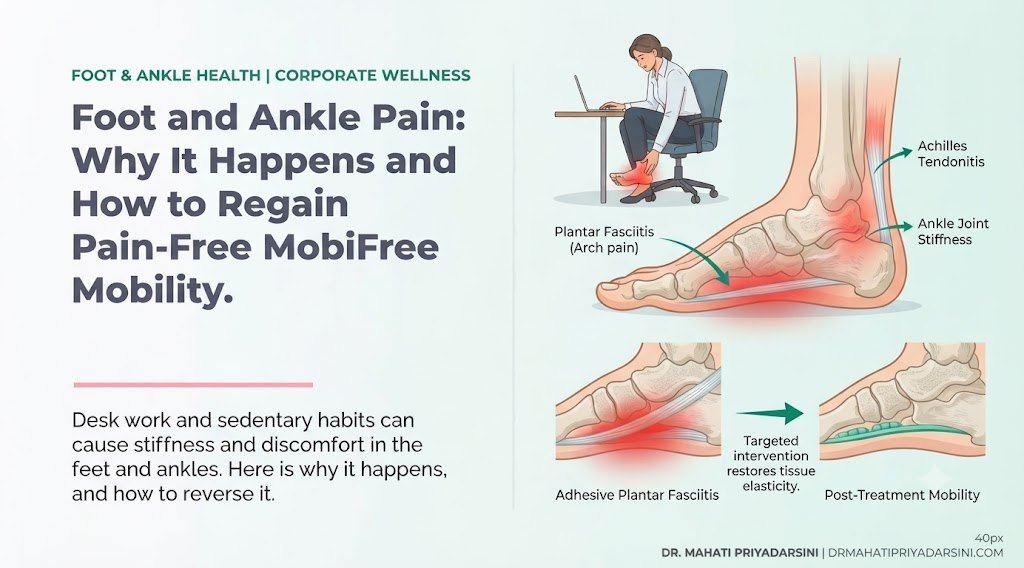
If you spend most of your workday at a desk and end up with stiff, aching, or swollen feet by the evening, you are not alone. This is one of the most common complaints among office based professionals, yet it rarely gets the same attention as back or neck pain.
If you are looking for practical foot and ankle pain relief for corporate employees, then this blog will help you understand exactly why this happens and how to fix it with simple daily habits, better footwear choices, and small workstation adjustments.
What Causes Foot and Ankle Pain in a Desk Job
A desk job does not look physically demanding, but it puts the feet and ankles under a specific kind of stress. Sitting for hours slows blood flow to the lower legs, which can leave the feet feeling heavy or swollen by the afternoon. Formal shoes with narrow toe boxes or thin soles offer little support and can quietly strain the arches. Hard office flooring adds pressure with every step, and limited space under most desks forces the legs into awkward, cramped positions for hours at a stretch. None of these factors seem serious on their own, but together they explain why ankle stiffness from sitting and general foot fatigue are so common in corporate settings.
Signs Your Feet Are Under Strain
Foot and ankle pain in office workers tends to build up gradually rather than appear all at once. The early signs are easy to dismiss, but they are worth paying attention to.
• Swelling around the ankles that shows up by the end of the workday
• A dull ache in the heel or arch after sitting or standing for long periods
• Stiffness in the ankles when standing up after a meeting
• Tightness in the calves that pulls on the ankle joint
• Tingling or numbness in the toes during long sitting stretches
If these symptoms show up regularly by the end of the day, your work routine, rather than an injury, is the likely cause.
Everyday Habits That Ease the Strain
The good news is that most desk job foot pain responds well to small, consistent changes rather than major lifestyle shifts. A short walk every hour keeps circulation moving and prevents fluid from pooling in the ankles. Rotating the ankles in slow circles and flexing the toes while seated takes less than a minute and helps release built-up tension. Standing up during phone calls, instead of taking them at the desk, adds natural movement across the day without disrupting work. Elevating the feet slightly under the desk, using a low stool or footrest, reduces pressure on the arches. Stretching the calves against a wall for twenty to thirty seconds after work also helps, since tight calves are a common contributor to ankle stiffness.
Footwear and Workstation Adjustments That Help
Ergonomic footwear for office workers makes a bigger difference than most people expect. Shoes with proper arch support and a slightly cushioned sole reduce strain far more effectively than flat, narrow office shoes. Keeping a supportive pair at the desk, even if formal shoes are worn to meetings, can prevent hours of unnecessary pressure. At the workstation, the chair height should allow the feet to rest flat on the floor, and an adjustable footrest can help if the desk is too high. Employees who spend part of the day standing benefit from an anti-fatigue mat, which reduces the impact on the joints compared to standing directly on hard flooring.
Sitting vs Standing at Work: Which Is Worse for Your Feet?
Neither position is completely safe for long, unbroken stretches. Sitting all day slows circulation and causes swelling and heaviness in the ankles, along with stiff joints, tingling toes, and general fatigue by the evening. The fix is mainly short walks and ankle stretches every hour. Standing all day keeps circulation more active but allows blood to pool in the lower legs, and it places far more strain on the arches and heels, especially on hard flooring, leading to sore heels, swollen feet, and tired calves. The fix here is an anti-fatigue mat and supportive, cushioned footwear. Most office roles involve a mix of both, so it helps to apply whichever fix matches what your day actually looks like.
Why Do My Feet Hurt After Sitting All Day at Work?
Sitting for long periods reduces blood flow to the lower legs and keeps the ankle joints in the same fixed position for hours. This combination causes fluid to build up around the ankles and stiffness to set into the joints and calf muscles. The pain often becomes more noticeable the moment you stand up, since the joints have to suddenly bear weight after being still for so long. Regular movement breaks are the most effective way to prevent this.
What Is the Best Footwear for Office Employees?
The best office footwear checks a few key boxes:
• Proper arch support to prevent the arches from collapsing during long hours on your feet
• A slightly cushioned sole to absorb impact on hard office flooring
• Enough room in the toe box so the foot is not compressed or pinched
• A low, stable heel rather than a narrow, pointed, or high-heeled design
• A snug but flexible fit that supports movement instead of restricting it
Completely flat shoes and narrow, pointed formal shoes tend to place uneven pressure on the arches and heels over a full workday. Many employees keep a supportive pair of shoes at their desk for daily wear and switch to formal footwear only for meetings, which significantly reduces overall strain on the feet.
When to See a Specialist
Most cases of workplace foot and ankle pain improve once movement, footwear, and posture are adjusted. Some symptoms, however, need a proper medical assessment rather than home care.
• Pain that continues for more than two weeks despite changing habits
• Swelling that does not go down overnight or gets worse over time
• Sharp pain while walking or bearing weight, rather than a dull ache
• Numbness or tingling that spreads up toward the calf
• Pain that follows a specific twist, fall, or injury at work
These signs can point to conditions such as plantar fasciitis in office workers, tendon strain, or nerve compression, which respond much better to early treatment than to a wait-and-see approach.
Conclusion
Foot and ankle pain does not have to be an accepted part of corporate life. Most of it comes down to long sitting or standing stretches, unsupportive footwear, and a lack of small movement breaks throughout the day. None of these causes require a major lifestyle change to fix, which is why small, consistent habits tend to work better than occasional effort.
Building in short walks, ankle stretches, and better footwear choices protects your feet far more effectively than any quick fix after the pain has already set in. Simple workstation adjustments, such as a footrest or an anti-fatigue mat, add up over a full workweek even though each change feels minor on its own.
If the discomfort keeps returning despite these changes, do not wait it out. Getting it checked early by a specialist is the simplest way to prevent a minor ache from turning into a lasting problem.