Migraine vs Headache: What's the Difference?
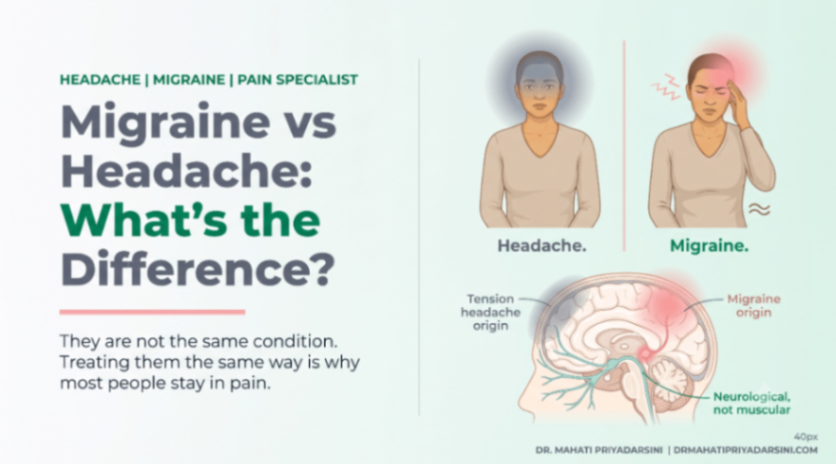
Migraine vs Headache: What's the Difference?
"I have a terrible headache" and "my migraine is acting up" often get used to mean the same thing, but they're not. A migraine is a specific type of headache with its own pattern, triggers and intensity. Knowing which one you're dealing with matters because the way you treat a regular headache is very different from how you manage a migraine.
If you've been popping painkillers for every headache without much thought, this guide will help you tell them apart — and know when it's time to get real help.
Most everyday headaches are harmless and settle on their own. Many people also turn to natural pain relief remedies in Hyderabad, like rest, hydration and warm compresses, before reaching for medicine, and these often do the trick. But if your head pain is frequent, severe, or stopping you from living normally, proper pain relief in Hyderabad can make a genuine difference and save you years of unnecessary suffering.
Here's how to understand the difference.
What is a regular headache?
A headache is pain or discomfort anywhere in the head. The most common type is a tension headache — the kind most of us get from stress, tiredness, skipping meals, dehydration, or staring at a screen too long.
A tension headache usually feels like:
● A dull, steady ache rather than a sharp or throbbing pain
● Pressure or tightness, like a tight band wrapped around your head
● Pain on both sides of the head
● Mild to moderate discomfort that lets you carry on with your day
These headaches rarely come with other symptoms. They build slowly, hang around for a few hours, and usually fade with rest, water, or a simple painkiller.
What is a migraine?
A migraine is much more than a bad headache. It's a neurological condition — meaning it involves the nervous system — and it tends to come in attacks that can knock you off your feet.
A migraine usually feels like:
● An intense, throbbing or pounding pain, often on just one side of the head
● Pain severe enough to disrupt work, sleep and daily life
● Worsening pain with movement, light or sound
But the pain is only part of the story. Migraines often bring extra symptoms that ordinary headaches don't:
● Nausea or vomiting
● Strong sensitivity to light, sound, or smell
● Blurred vision or seeing flashing lights and zigzag patterns (called an "aura")
● Tingling in the face or hands
● Extreme tiredness before and after the attack
A migraine attack can last anywhere from a few hours to three days, which is why it's so much more disruptive than a normal headache.
The key differences at a glance
The simplest way to tell them apart is to look at three things: the type of pain, how bad it is, and what comes with it.
A tension headache brings dull, mild pressure on both sides, with no other symptoms, and you can usually push through your day. A migraine brings intense, throbbing pain often on one side, severe enough to stop you in your tracks, and is frequently paired with nausea, light sensitivity or vision changes.
If your "headache" forces you to lie down in a dark, quiet room, it's very likely a migraine.
What triggers them?
Common headache triggers: stress, poor sleep, dehydration, skipped meals, eye strain, and bad posture.
Common migraine triggers: these are often more specific and personal. They can include certain foods (aged cheese, chocolate, processed meats), caffeine, alcohol, hormonal changes, bright lights, strong smells, weather changes, and stress. Keeping a simple diary of when attacks happen can help you spot your own triggers.
How they're treated
Most tension headaches respond well to rest, hydration, stress control, and the occasional over-the-counter painkiller.
Migraines need a more thought-out approach. This may include specific migraine medicines to stop an attack early, preventive treatments for people who get them often, and lifestyle changes to avoid known triggers. Relying on painkillers alone — especially taking them too often — can actually make migraines worse over time, so guidance matters.
When to see a doctor
It's time to get checked if:
● Your headaches or migraines are becoming more frequent or more severe
● The pain isn't relieved by usual remedies
● You're taking painkillers very often just to get through the day
● A headache comes on suddenly and is extremely severe
● The pain comes with confusion, weakness, slurred speech, vision loss, or a stiff neck — these need urgent attention
The last point is important. A sudden, worst-ever headache or one with those warning signs should never be ignored.
The bottom line
Not every headache is a migraine, and not every migraine is "just a headache." Learning to tell the difference helps you treat the problem the right way instead of guessing. Simple headaches usually need rest and basic care. Migraines need a proper plan.
If head pain is becoming a regular part of your life, don't just keep reaching for tablets. Getting it properly assessed is the surest way to find lasting relief.