Pain During Periods: What's Normal and What Isn't?
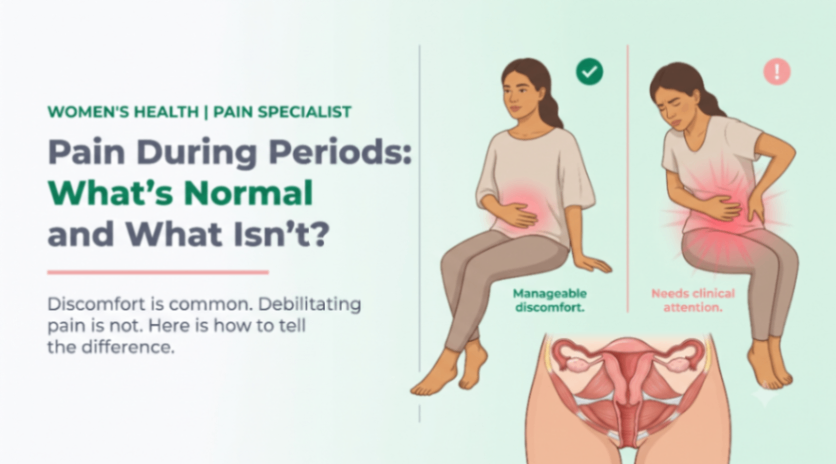
Pain During Periods: What's Normal and What Isn't?
For most women, some discomfort during their period is just part of monthly life. A bit of cramping, a dull ache in the lower belly, maybe some tiredness, these are familiar and usually harmless. But there's a big difference between normal period pain and pain that's trying to tell you something is wrong.
The problem is that many women are taught to simply "put up with it." So when their pain is actually severe or unusual, they assume it's normal and suffer in silence for years. Knowing where the line sits, between ordinary cramps and a warning sign, can make a real difference to your health and comfort.
When cramps strike, most women look for fast relief. Some try natural pain relief remedies in Hyderabad, like a hot water bottle, warm baths, gentle stretching, or herbal teas. Others search for things like the top 10 pain relief sprays in India, though it's worth knowing those sprays are made for muscle and joint aches, not menstrual cramps, so they won't help with period pain. The right approach depends on understanding what's actually causing your discomfort.
Here's a simple guide to what's normal and what isn't.
What causes period pain in the first place?
During your period, your uterus contracts to shed its lining. These contractions are triggered by natural chemicals called prostaglandins. The stronger the contractions, the more cramping you feel. This is why mild to moderate cramps are completely normal and affect most women at some point.
This kind of pain is called primary dysmenorrhoea, pain that comes purely from the normal workings of your cycle, with no underlying disease.
What normal period pain looks like
Normal menstrual pain usually:
● Starts a day or two before your period or as it begins
● Feels like cramping or a dull ache in the lower belly, sometimes spreading to the lower back and thighs
● Stays mild to moderate, uncomfortable, but manageable
● Eases within two to three days
● Responds to rest, heat, and simple painkillers
If your pain fits this pattern and doesn't stop you from going about your day, it's most likely nothing to worry about.
When period pain isn't normal
Pain becomes a concern when it's severe, unusual, or changing. See a doctor if you notice:
● Pain so intense that you regularly miss work, school, or daily activities
● Pain that lasts much longer than your usual two to three days
● Pain that's getting worse over time rather than staying the same
● Pain outside your period — in the middle of your cycle or during intercourse
● Very heavy bleeding, large clots, or periods that suddenly change in pattern
● Pain that doesn't respond to usual remedies or painkillers
This kind of pain — called secondary dysmenorrhoea — often points to an underlying condition rather than just normal cramps.
Conditions that can cause severe period pain
Endometriosis. Tissue similar to the womb lining grows outside the uterus, causing intense pain during periods, and sometimes during intercourse or at other times of the month. It's common but frequently goes undiagnosed for years.
Fibroids. These are non-cancerous growths in the uterus that can cause heavy bleeding and strong cramping.
Adenomyosis. Here, the womb lining grows into the muscle wall of the uterus, leading to heavy, painful periods.
Pelvic inflammatory disease (PID). An infection of the reproductive organs that can cause pain and needs prompt treatment.
These conditions are treatable, but only once they're properly diagnosed, which is why severe pain should never just be tolerated.
What helps at home
For normal period pain, simple steps often bring real relief:
● Apply heat. A hot water bottle or heating pad on the lower belly relaxes the muscles and eases cramps.
● Stay gently active. Light walking or stretching can reduce pain, even when you don't feel like moving.
● Watch your diet. Staying hydrated and cutting back on salt, caffeine, and sugar around your period can help.
● Rest well. Good sleep and stress control make cramps more bearable.
● Use simple painkillers. Over-the-counter anti-inflammatory medicines work well for many women when taken early.
When to see a specialist
Home care handles normal cramps well, but it isn't enough when the pain is severe or unusual. A specialist can find out whether something more is going on and treat the actual cause, not just mask the symptoms. Getting checked early can prevent conditions like endometriosis or fibroids from quietly worsening over the years.
The bottom line
Some period pain is completely normal, but severe, worsening, or unusual pain is not something you simply have to live with. Your body is sending a signal, and it deserves to be heard.
If your periods are seriously disrupting your life, don't accept it as "just how things are." A proper assessment is the first step towards real, lasting relief, and often towards answers you've been waiting years for.