PRP Treatment for Knee Pain: Benefits, Risks, Procedure and Recovery
Do you have knee pain that just will not go away? Maybe you find it hard to climb stairs now or you feel really stiff when you get up after sitting for a bit or your knee hurts after you go for a walk. If you have tried taking painkillers resting and doing exercises and you still do not feel better you might have heard about PRP treatment for your knee pain.
PRP treatment is something that a lot of people with knee pain are trying now especially when their knee pain is because of early arthritis or their tendons are damaged or their joints are irritated all the time.. Prp treatment is not a magic solution that will make your knee pain disappear and it is not the right choice, for every single person who has knee pain.
What Exactly is PRP Treatment?
A treatment plan is built around the cause of your knee pain. If you are considering Platelet-Rich Plasma, which is also known as PRP you should know what it is. PRP stands for Platelet-Rich Plasma. Your blood contains cells called platelets which play an important role in healing and tissue repair.
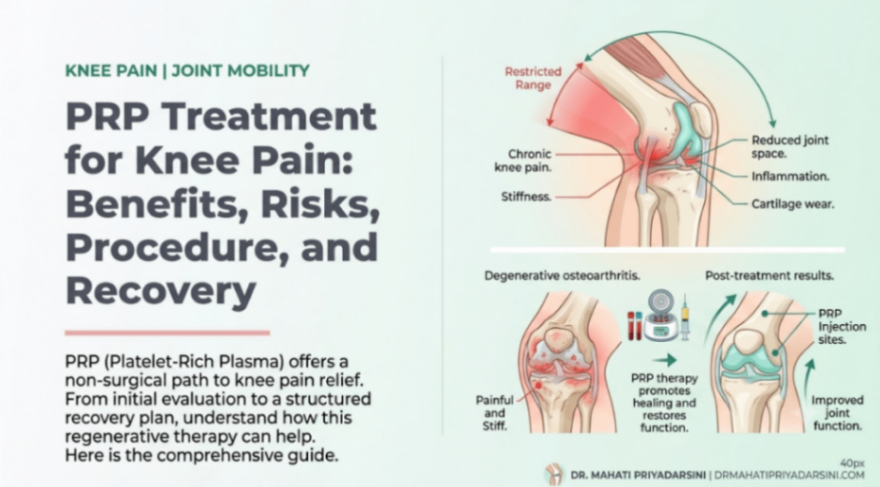
During PRP treatment a small amount of your blood is taken and placed in a machine called a centrifuge. This. Concentrates the platelet-rich part of the blood. That concentrated plasma is then injected into the area of the knee.
When can Platelet-Rich Plasma help with knee pain?
Platelet-Rich Plasma isn't suitable for every knee problem. It may be considered for people with :
· Mild to knee osteoarthritis
· Long-standing tendon problems around the knee
· Certain ligament or soft-tissue injuries
· Persistent knee pain that hasn't improved enough with rest, physiotherapy and other conservative treatments.
· For people with knee osteoarthritis, the smooth cartilage inside the joint gradually wears down. This can lead to pain, stiffness, swelling and difficulty with activities like walking, climbing stairs or standing for periods.
· Platelet-Rich Plasma may help reduce symptoms in some people. Particularly when the joint isn't severely damaged.
The important part is getting the diagnosis first. A torn meniscus, arthritis, infection or major ligament injury won't all respond to Platelet-Rich Plasma in the same way.
What are the benefits of Platelet-Rich Plasma treatment?
The biggest benefit is that Platelet-Rich Plasma uses your blood so there is no foreign medication being introduced into the body.
Potential benefits include:
· Reduced knee pain, stiffness and improved joint movement,
· Better ability to walk, exercise and manage daily activities,
· Possible improvement in symptoms of mild to moderate osteoarthritis,
· A minimally invasive treatment that doesn't involve surgery.
Another advantage is that Platelet-Rich Plasma may allow some people to reduce their dependence on repeated pain medication.
It's essential to be realistic. Platelet-Rich Plasma doesn't instantly rebuild a damaged knee and it doesn't guarantee that you will never need further treatment. Results vary from person to person.
Some people notice improvement over several weeks while others may not experience significant relief.
What happens during the procedure?
Platelet-Rich Plasma treatment is usually an outpatient procedure.
First a small sample of your blood is taken. Similar to a blood test. The blood is then placed in a centrifuge, which separates the rich plasma from the other blood components.
The skin around the knee is. The Platelet-Rich Plasma is injected into the targeted area. In some cases ultrasound guidance may be used to help the doctor place the injection accurately.
The whole process usually doesn't take long and you can generally go home the same day.
You may feel some discomfort during the injection. The procedure is usually well tolerated.
What should you expect after a Platelet-Rich Plasma injection?
Your knee may feel sore, swollen or stiff for a days after the injection. This can happen because the treatment is intended to trigger a healing response in the area.
For the few days your doctor may advise you to :
· Rest the knee and avoid heavy activity
· Use ice if recommended for discomfort or swelling
· Avoid running, jumping or heavy gym workouts
· Follow the specific instructions given by your doctor.
· You usually won't see improvement overnight.
Platelet-Rich Plasma works gradually. Some people begin noticing improvement within a weeks while the full effect can take longer. Your recovery also depends on the underlying knee problem your activity level and whether you're following a rehabilitation plan.
Physiotherapy is often a part of the process. Strengthening the muscles around the knee and improving movement can help protect the joint and improve long-term results.
What are the risks and side effects?
Because Platelet-Rich Plasma comes from your blood serious reactions are uncommon. That doesn't mean the procedure is completely risk-free.
Possible side effects include:
· pain or soreness at the injection site,
· swelling or stiffness in the knee ,
· bruising,
· infection although this is uncommon when proper sterile techniques are used,
· no improvement in symptoms.
There is also a risk that matters: spending time and money on a treatment that may not be suitable for the actual cause of your knee pain.
That's why Platelet-Rich Plasma should not be treated as a one-size-fits-all solution.
Who may not be a candidate for Platelet-Rich Plasma?
Platelet-Rich Plasma may not be suitable for everyone.
Your doctor will need to consider your health and the exact cause of your knee pain. People with blood disorders, active infections or other medical conditions may need a different treatment approach.
Severe knee arthritis may also require options because an injection cannot reverse extensive joint damage.
This is why a proper assessment matters. The question isn't simply "Can I get Platelet-Rich Plasma?" Its "Is Platelet-Rich Plasma the treatment for my knee?"
How long does recovery take?
Recovery after a Platelet-Rich Plasma injection is usually quicker than recovery from surgery. Improvement isn't immediate.
Most people can return to daily activities fairly soon while strenuous exercise may need to be avoided for a period recommended by the treating doctor.
A realistic recovery plan usually looks something like this:
· The few days: Mild soreness or swelling may occur. Rest and avoiding loading are usually recommended.
· The weeks: Gentle movement and rehabilitation may begin, depending on your condition.
· Over the several weeks to months: Improvement in pain and function may gradually become more noticeable.
Your recovery timeline can be different depending on whether you're being treated for osteoarthritis a tendon problem or another knee condition.
Is one Platelet-Rich Plasma injection ?
Not always. Some treatment plans use an injection while others may involve a series of injections. There isn't one Platelet-Rich Plasma protocol that works for everyone.
The number of injections and the gap between them should be based on your diagnosis, symptoms and response to treatment.
If someone promises that one injection will permanently cure every type of knee pain that's a reason to be cautious.
What else should be part of your knee treatment?
Platelet-Rich Plasma works best when its part of a treatment plan. Not when its expected to do all the work on its own.
Depending on the cause of your pain treatment may also include:
· Physiotherapy and strengthening exercises
· Weight management if excess weight is putting pressure on the knee
· Activity modification
· Pain relief medication when appropriate
· Other injections or procedures if Platelet-Rich Plasma isn't suitable
· Surgery in cases of severe structural damage
The goal should always be to treat the real source of the pain not just temporarily quiet the symptoms.
When should you see a specialist?
It's worth getting your knee checked if:
· Pain has lasted for weeks and isn't improving
· Your knee is regularly swollen, stiff or painful
· Climbing stairs walking or standing is becoming difficult
· The knee locks. Feels unstable
· You have trouble bearing weight
· Your pain is getting steadily worse or disturbing your sleep
These symptoms don't automatically mean you need Platelet-Rich Plasma. They do mean it's worth finding out what’s happening inside the joint.
A specialist can assess whether your problem is related to arthritis, cartilage damage, a tendon injury or something else. Help you decide whether Platelet-Rich Plasma treatment, physiotherapy or another approach makes the most sense.
The bottom line
Is that Platelet-Rich Plasma treatment can be an option for some types of knee pain particularly mild to moderate osteoarthritis and certain soft-tissue problems. It's minimally invasive uses your blood and may help reduce pain and improve movement over time.
Platelet-Rich Plasma isn't a magic cure. And it isn't the right answer, for every painful knee.
The best results start with a diagnosis and a treatment plan built around the actual cause of your pain. If knee pain is becoming a part of your life don't just keep managing it with temporary fixes. Getting it properly assessed can help you understand your options and choose the treatment that’s right for you.