Why Do Your Hands Feel Numb After a Long Day at Work?
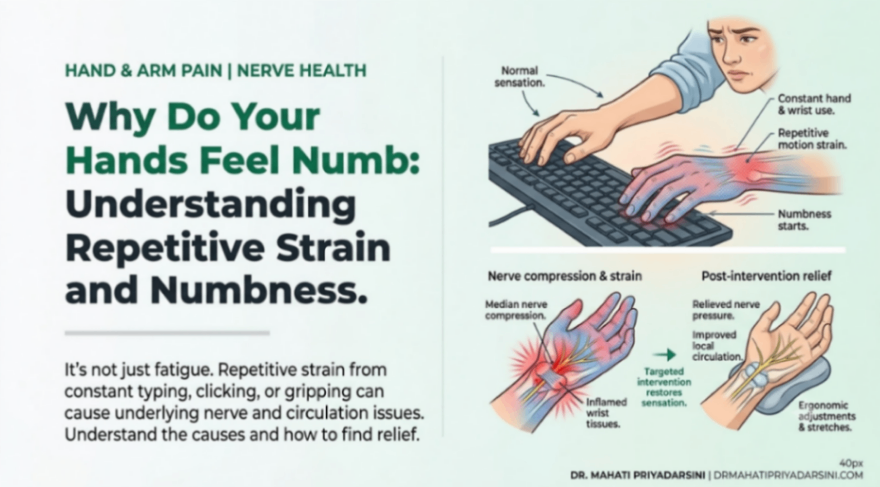
You spent most of the day on your laptop. You had to answer emails attend meetings and meet deadlines. When you finish you feel hand numbness or a strange tingling in your fingers. You notice discomfort around your wrist, a type of wrist pain.
You shake your hand stretch your fingers and continue your evening. It does not seem like much at first. When the same hand numbness returns after another workday you may start wondering what is causing it.
Hand numbness after work can happen for reasons. Sometimes it is caused by nerve compression, such as carpal tunnel syndrome. In cases the problem may involve a nerve in your neck or another hidden condition.
If you are looking for information about wrist pain in Hyderabad learning about these symptoms is a first step. If the discomfort keeps coming a qualified clinician can find the cause and decide whether pain management in Hyderabad or another specialist is right, for you.
Let us see what might be happening to your hand numbness, what you can do while working and when you should not ignore the wrist pain.
What Causes Hand Numbness After Working on a Computer?
Most office jobs mean you use your hands all the time. You type, move the mouse click, take notes and switch between computers. Sometimes you don't even realize how long you have been sitting in the spot.
Doing the movements over and over and having your wrists in strange positions can make you feel uncomfortable.. Feeling numb is not always because your muscles are tired or because you worked too long at the computer.
Your hands get feeling from nerves that come from areas of your body. When a nerve gets upset or pressed you might feel a tingling feeling, less feeling or even weakness.
One possible reason is carpal tunnel syndrome. This happens when the median nerve gets squeezed in a space in the wrist.
Other issues, like nerves getting upset, in the neck or some health problems can also lead to numbness in the fingers.
The key is to pay attention when the symptoms show up which part of the hand is affected and if the issue keeps happening.
Could Your Desk Job Be Making Your Wrist Pain Worse?
Think about your way of working. You might spend the morning responding to messages the afternoon getting reports the evening wrapping up things that didn't get done during the day.
When your hands are always moving it's easy to miss any pain or discomfort until you finally stop working.
Some habits can cause stress on your wrists:
• Keeping your wrists bent for a time while typing.
• Staying in the position, for many hours.
• Using a keyboard or a mouse that feels uncomfortable to use.
• Holding your phone for a time after work is done.
• Keeping doing something even when it hurts over and again.
These habits don't automatically mean that you have carpal tunnel syndrome. They can cause discomfort. Make existing problems worse but a proper check-up is needed to find the real reason.
Try changing the way your keyboard and mouse are set up so your wrists can stay mostly straight. Take breaks and move around during the day.
If your fingers still feel numb after making these changes don't think that your work area is the only reason.
How Can You Recognise Carpal Tunnel Syndrome?
Carpal tunnel syndrome can start slowly. Some people feel tingling and then at first while others wake up with a hand that feels numb or uncomfortable.
Common signs include:
Tingling in fingers: The thumb, index finger, middle finger and part of the ring finger often feel strange.
Numbness at night: You might wake up shaking your hand because it feels tingly or like it has lost feeling.
Pain near the wrist: The pain can spread into the hand or up the forearm.
Trouble holding things: It may become harder to grip a cup use a phone or manage items if muscle weakness shows up.
Dropping things often: If your fingers stay numb or feel weak it can make it harder to keep a steady hold on things.
Not everyone has the symptoms. Also numbness in fingers or, in both hands can come from other causes. A clinician can look at the pattern. Decide if carpal tunnel syndrome is probably the reason.
Why Do Your Hands Sometimes Feel Worse at Night?
Your hands might feel fine while you work. The tingling can become more obvious when you go to bed.
For some people who have carpal tunnel syndrome sleeping with the wrist bent can raise the pressure inside the carpal tunnel. Worsen symptoms. You may wake up move your wrist or shake your hand to feel more comfortable.
Nighttime symptoms can be frustrating especially when interrupted sleep leaves you tired the morning.
However waking up with a hand does not automatically mean you have carpal tunnel syndrome. Other nerve related conditions can produce symptoms.
If the problem happens regularly together with persistent numbness or weakness during the day arrange a medical assessment instead of relying only on changes, to your sleeping position.
What Can You Change During Your Workday?
I know how it feels when your wrist begins to hurt and you might be tempted to ignore it until the end of the workday. Instead watch the activities and positions that seem to worsen the symptoms.
A few simple changes can help reduce the strain that's unnecessary.
Check how you position your hands: Keep your wrists straight while typing instead of bending them sharply upwards or downwards.
Adjust your workstation: Place your keyboard and mouse comfortably so you do not have to reach. Adjust your chair and desk to support a working posture.
Take breaks: If you have been typing for a time pause, change positions and relax your hands before returning to work.
Avoid pushing through recurring discomfort: If a particular activity repeatedly aggravates your wrist symptoms try modifying it of continuing without a break.
Notice when the numbness occurs: Pay attention to which fingers are affected whether the symptoms happen during work or sleep and whether you experience weakness.
These changes may help with workplace strain: They will not treat every possible cause of hand numbness. If the symptoms persist medical advice is important.
When Should You Get Hand Numbness or Wrist Pain Checked?
It is easy to delay an appointment when you're busy with work and family responsibilities. You might tell yourself that you will get the appointment checked if it happens again. However recurring symptoms deserve attention especially when symptoms begin affecting sleep work or ordinary activities.
Consider consulting a doctor if:
· Your hand regularly goes numb while you are sleeping.
· Tingling or wrist discomfort keeps returning.
· You experience numbness even when you are not using a computer.
· You notice reduced grip strength or increasing weakness.
· You struggle to hold objects or start dropping them
Persistent numbness and worsening weakness need assessment because long nerve pressure can sometimes cause lasting problems.
Get emergency help if numbness begins suddenly especially if it occurs with arm weakness, facial drooping, difficulty speaking or other sudden neurological symptoms. These signals may indicate an emergency rather, than an ordinary wrist problem.
How Do Doctors Find the Cause?
When you go to the doctor you usually start by telling them what’s been going on with you. They might ask you which fingers feel numb how long the numbness lasts, if it wakes you up at night and if you spend a lot of time using a computer. Your past health problems can also help the doctor figure out what’s going on.
The doctor may check how well you feel things how strong your grip's how your wrist moves and if there are any signs that nerves are being irritated.
If the doctor needs information they might suggest nerve conduction studies or electromyography which is often called EMG. These tests look at how nerves are working and can give more details when needed.
Sometimes other tests are done if your symptoms point to something like a problem, in your neck or another health issue.
The goal is to find out exactly what’s causing the numbness of just assuming it’s because of computer use.
What Treatment May Help?
The treatment plan depends on the underlying cause. The severity of the symptoms matters.
For some people who have carpal tunnel syndrome a clinician may suggest wearing a wrist splint at night or changing activities that make the symptoms worse.
Other treatment options depend on the individuals condition. If the symptoms are severe, persistent or tied to weakness or nerve damage a specialist may discuss surgery to relieve pressure on the median nerve.
If another condition causes the numbness the treatment plan may be different.
There is no solution that fits everyone.
Identifying the cause is a step, toward choosing the treatment.
Finding Help for Wrist Pain in Hyderabad
I know how hand numbness and wrist discomfort can be frustrating. Hand numbness and wrist discomfort can disturb more than the hours you spend at work. They can also disturb your sleep. Hand numbness and wrist discomfort can make it hard to use objects. Hand numbness and wrist discomfort can stop the activities that you normally take for granted.
If you are experiencing wrist pain in Hyderabad it is a good idea to see a qualified clinician. A qualified clinician can look at your symptoms. A qualified clinician can tell you what to do
Depending on the cause pain management in Hyderabad may need an assessment by a pain specialist. It may also need a referral, to another specialist like a neurologist or a hand surgeon, when that's appropriate.
The right approach depends on the diagnosis. If you have recurring numbness, worsening pain or reduced grip strength you should not rely on home remedies. You should seek help.
Don't Ignore What Your Hands Are Telling You
A busy workday can leave you occasional discomfort may not seem worth worrying about. If your fingers keep tingling or your hands repeatedly go numb after work it's worth paying attention.
Carpal tunnel syndrome is one explanation but it isn't the only one. Other nerve-related and medical conditions can produce symptoms. You might not realize it at first. Your body is trying to tell you something.
Making your workstation more comfortable may help reduce strain. Adjusting chair height, keyboard position or taking breaks could make a difference. If the numbness or weakness keeps coming back it's time to get it checked.
If your symptoms are affecting your work, sleep or everyday activities don’t keep putting off finding out what’s causing them. It’s better to know what’s going on early than to wait until it gets worse.